If you’ve spent years cleaning contacts, buying solution, or waking up wondering whether you accidentally slept in your lenses, tossing them aside after LASIK can feel like a huge relief.
Our specialists at Marano Eye Care, a division of Ophthalmology New Jersey, would be happy to celebrate that victory with you. We specialize in advanced eye care for the entire family, including intricate surgeries like LASIK. Our team enjoys sharing our expertise with our neighbors in Denville, Livingston, and Newark, New Jersey.
But before you decide to ditch your contacts for good, there are several things worth knowing about the procedure and the evaluation that must come first.
LASIK reshapes the cornea
LASIK, short for laser-assisted in situ keratomileusis, corrects certain types of refractive errors by changing the shape of the cornea, the clear surface at the front of the eye.
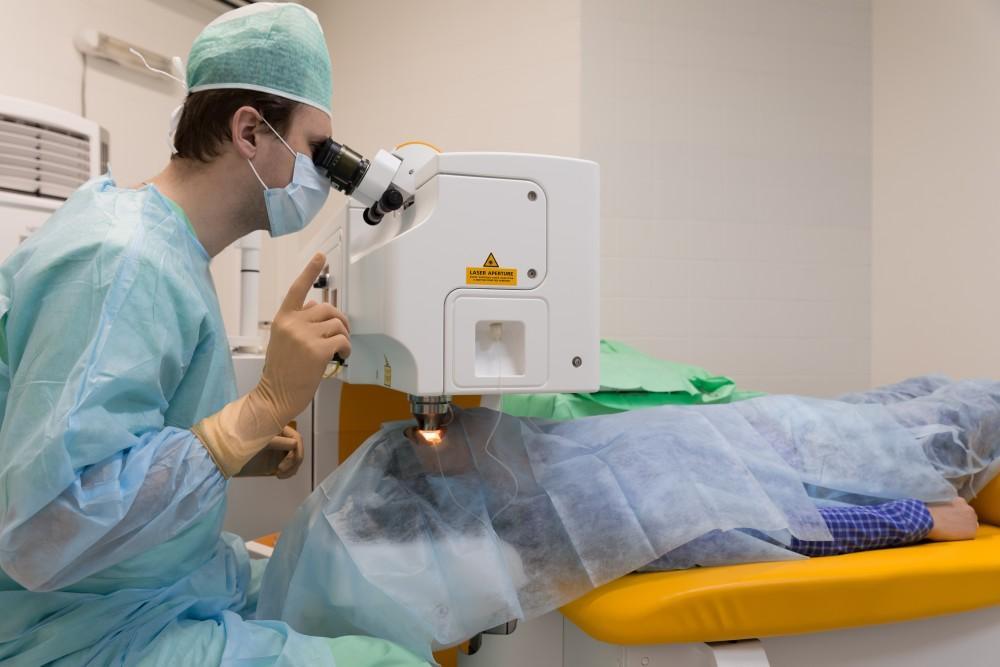
During the procedure, we use a laser to remove precisely calculated amounts of corneal tissue so light can focus more accurately on the retina. The procedure is generally quick, and numbing eye drops keep you comfortable throughout.
However, because LASIK changes the cornea's structure, careful measurements and screening are essential before treatment.
Not everyone is a candidate
Having a prescription for glasses or contacts does not automatically make someone a good LASIK candidate.
During a consultation, your Marano Eye Care surgeon evaluates your prescription, corneal thickness and shape, tear-film health, and overall eye health. Certain conditions, including some corneal disorders, uncontrolled dry eye, and autoimmune diseases, may affect whether LASIK is advisable.
Your prescription also needs to be reasonably stable. If your vision has changed significantly recently, your doctor may recommend waiting before considering surgery.
The evaluation is about more than checking whether you can read the smallest line on an eye chart. The goal is to determine whether your eyes are healthy enough for the procedure and whether LASIK is likely to provide a useful improvement.
You need to take a preoperative break from contacts
This can be an easy detail to overlook when you're eager to move forward.
Contact lenses can temporarily alter the cornea's shape, which may affect the measurements used to plan LASIK. For that reason, your eye doctor may ask you to stop wearing contacts for a period of time before your evaluation and then again before surgery.
How long you need to go without contacts depends partly on the type of lenses you wear and how frequently you use them. Follow your surgeon's specific instructions rather than switching back to contacts on your own schedule.
Understand what LASIK can and can’t do
One of the most important parts of a LASIK consultation is discussing expectations.
LASIK can reduce dependence on glasses and contact lenses, but it doesn't guarantee you will never need corrective lenses again. Some people may still use glasses for certain activities such as reading.
And as you get older, the natural lens inside the eye gradually becomes less able to focus on nearby objects. This age-related change, called presbyopia, can occur even after successful LASIK.
In other words, LASIK corrects your current refractive error; it does not stop the eyes’ normal aging process.
Understanding LASIK recovery
Many people notice improved vision relatively soon after LASIK, although the experience varies from person to person. Temporary symptoms such as dry eyes, fluctuating vision, glare, halos, or increased sensitivity to light can occur during healing.
Your surgeon will provide instructions for using prescribed eye drops and protecting your eyes while they recover. Follow-up appointments are also important, even if your vision seems excellent.
Want to know more about LASIK?
If you're tired of glasses and contacts, LASIK may be a life-altering option, but the right starting point is a comprehensive evaluation, not simply choosing a procedure date.
Call our team at Marano Eye Care to schedule a consultation today.